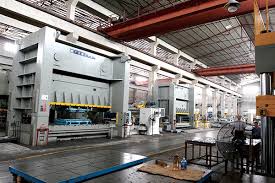
If you look around your home or office, you will likely spot dozens of items that exist because of a mechanical press. From the intricate connectors in your smartphone to the body panels of your car, these powerful machines are the heartbeat of high-volume manufacturing. They transform raw sheet metal into usable parts with incredible speed and precision.
What are the key components and functions?
At its core, a mechanical press converts rotational force into linear force. An electric motor powers a flywheel, which stores kinetic energy. When the operator triggers the machine, a clutch engages, transferring that energy to a crankshaft. This moves a ram (or slide) up and down, delivering a powerful blow to the material.
While designs vary, most presses share these fundamental components:
- The Frame: This is the rigid structure that supports the machine. It must be strong enough to withstand the shock of the press stroke without deflecting.
- The Bed or Bolster: A stationary flat plate where the lower die is mounted.
- The Ram (Slide): The moving upper part of the press that holds the upper die. It travels down to strike the workpiece.
- The Drive Mechanism: Usually consisting of a motor, flywheel, clutch, and brake. This system manages the energy required to stamp the metal.
Types of Mechanical Presses
Not all manufacturing floors look the same, and neither do the presses that power them. Engineers choose specific types of presses based on the tonnage required, the size of the part, and the volume of production.
Gap Frame (C-Frame) Presses
These are among the most common machines found in job shops. They are shaped like the letter “C,” which allows for easy access to the die area from three sides. This openness makes them excellent for hand-feeding parts or handling smaller progressive dies. However, the “C” shape can allow the frame to flex slightly under heavy loads, which is known as “yaw.”
Straight Side Presses
For projects requiring high precision and heavy tonnage, straight side presses are the standard. The frame consists of two vertical columns (uprights) on either side of the bed, eliminating the deflection found in C-frame designs. These are typically used for larger progressive dies and transfer die applications where rigidity is non-negotiable.
Servo Presses
The servo press represents the biggest leap in technology in recent decades. Instead of a standard flywheel and clutch, these machines use high-torque servo motors to drive the ram directly. This allows operators to fully program the stroke speed, dwell time, and slide position. It offers the versatility of a hydraulic press with the speed and efficiency of a mechanical one.
Applications in Manufacturing
Mechanical presses are the workhorses of the metal forming world. Their primary advantage is speed; some high-speed presses can operate at over 1,000 strokes per minute. This makes them indispensable for industries that require millions of identical parts.
Automotive Industry
The automotive sector is the largest consumer of stamped parts. Presses are used to form everything from structural brackets and chassis components to the cosmetic skin of the vehicle doors and hoods.
Electronics and Appliances
Consider the casing of your washing machine or the tiny metal contacts in a USB port. These are produced using high-precision mechanical presses. This equipment is also vital for custom metal stamping, where specific, complex geometries must be created for specialized industrial equipment.
Aerospace and Defense
While volume is lower in aerospace, precision is critical. Presses are used to form durable, heat-resistant alloys into engine components and structural fittings that must meet rigorous safety standards.
What are the advantages and disadvantages?
Choosing a mechanical press over a hydraulic or pneumatic alternative involves weighing speed against flexibility.
Advantages:
- High Production Speed: They are significantly faster than hydraulic presses, making them ideal for high-volume runs.
- Accuracy: The fixed stroke length ensures consistent part depth and repeatability.
- Lower Maintenance: Generally, mechanical drive systems require less maintenance than hydraulic systems, which are prone to leaks.
Disadvantages:
- Full Power Only at Bottom: A mechanical press delivers its maximum tonnage near the bottom of the stroke. If you need full power throughout the entire travel, a hydraulic press is a better option.
- Fixed Stroke Length: Unless you are using a servo press, the stroke length is difficult or impossible to change on the fly.
- Initial Cost: Heavy-duty mechanical presses often have a higher upfront capital cost compared to simple hydraulic setups.
Stainless steel CNC machining in mechanical presses
While a mechanical press forms metal, it relies heavily on components created by other manufacturing processes to function correctly. This is where the synergy with CNC machining comes into play.
The dies (the tools that actually shape the metal) are subjected to immense pressure and friction. To withstand millions of cycles, these dies are often crafted from hardened tool steels using stainless steel CNC machining. The precision of the CNC process ensures that the die fits perfectly within the press.
Furthermore, stainless steel components are often used within the press mechanism itself—specifically in areas requiring corrosion resistance or high durability. For the end product, a part might be roughly formed in a mechanical press and then moved to a CNC machine for final detailing, such as drilling precise holes or facing surfaces that the press cannot achieve alone.
Maintenance and Safety Tips
Because mechanical presses store and release massive amounts of energy, they require strict maintenance and safety protocols. Neglect can lead to catastrophic machine failure or severe injury.
Maintenance Priorities:
- Lubrication: This is the lifeblood of a press. Automated lubrication systems should be checked daily to ensure grease or oil is reaching all bushings and bearings.
- Clutch and Brake Inspection: A worn brake lining can cause the ram to drift or fail to stop, which is a major safety hazard.
- Gib Adjustment: The gibs guide the slide. If they are too loose, accuracy suffers; if they are too tight, the machine can overheat and seize.
Safety Essentials:
- Light Curtains: These optical sensors stop the machine instantly if an operator’s hand breaks the invisible barrier.
- Two-Hand Controls: This requires the operator to have both hands on buttons to trigger the cycle, ensuring hands are clear of the die area.
- Die Blocks: Physical safety blocks should always be placed between the dies during maintenance to prevent the ram from falling accidentally.
Future Trends in Mechanical Press Technology
The “dumb iron” of the past is being replaced by intelligent systems. The future of mechanical presses lies in connectivity and adaptability.
IoT and Predictive Maintenance
Modern presses are equipped with sensors that monitor temperature, vibration, and tonnage on every stroke. This data is fed into the Industrial Internet of Things (IIoT), allowing plant managers to predict when a bearing will fail before it happens, drastically reducing unplanned downtime.
Energy Efficiency
Newer servo-driven designs are incorporating energy recovery systems. Similar to regenerative braking in an electric car, the press captures energy during the deceleration phase of the ram and uses it to power the next stroke, lowering overall energy consumption.
Lightweighting Capabilities
As industries like automotive push for lighter vehicles, presses must adapt to form advanced high-strength steels and aluminum. This requires stiffer frames and more sophisticated control over the forming speed to prevent cracking these difficult materials.
Conclusion
Mechanical presses have underpinned global manufacturing for over a century, and their relevance is only growing. Whether it is a traditional C-frame or a cutting-edge servo system, these machines offer the speed and reliability necessary to keep supply chains moving.


